Author: Cold Rink Club

  • The Hockey Mum Planner I Wish I’d Had in Our First Season

    The Hockey Mum Planner I Wish I’d Had in Our First Season

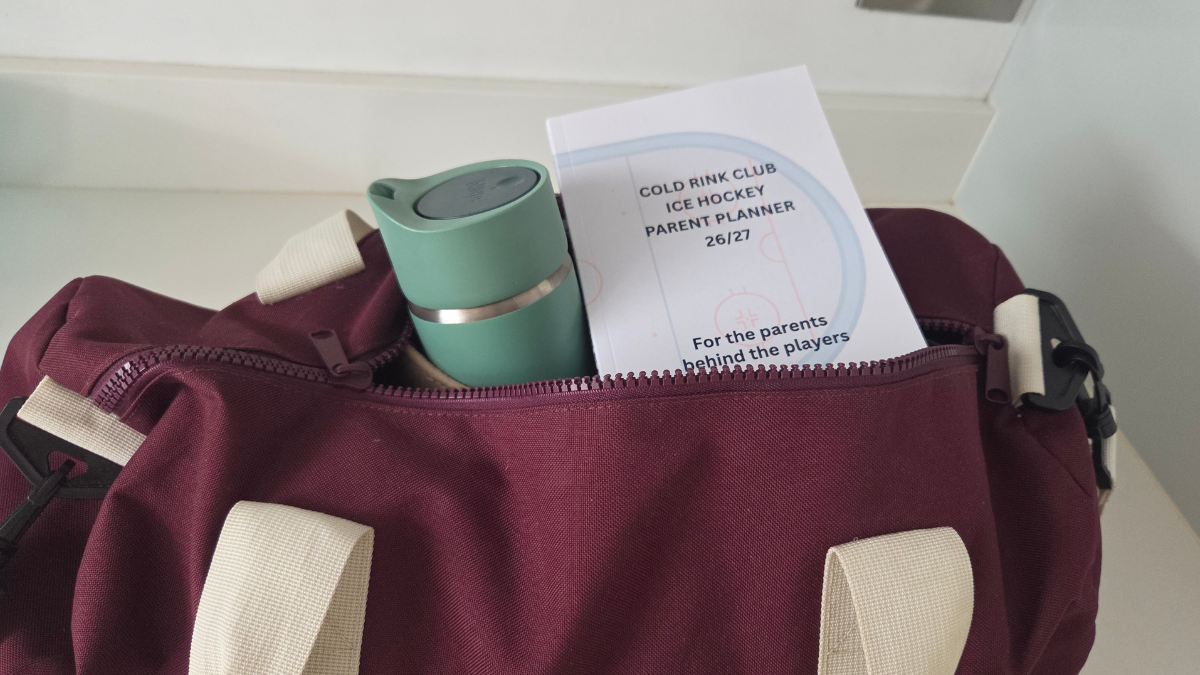
    Image of a maroon coloured bag, partially zipped, with a green travel flask and Cold Rink Club Ice Hockey parent planner peaking through

    When your child starts playing ice hockey, nobody warns you about the admin.

    You expect the early mornings. You expect the cold rinks. You expect to spend an unreasonable amount of time learning what all the different bits of kit are called and why the one your child desperately needs is never available in the right size.

    What you don’t expect is to become the keeper of an entire hockey season.

    Fixtures arrive. Then they change.

    Training times move. Extra sessions appear. Tournaments are announced months in advance, then suddenly seem to be happening next weekend.

    There are camps, trials and team events. Away games need routes and parking plans. Skates need sharpening. Kit gets outgrown. Payments need making. Coaches send important information in messages that you absolutely intend to remember and absolutely will not.

    Before long, your child plays hockey and you appear to have taken on a second job in logistics.

    A hockey season is too big for a calendar

    I did have a calendar.

    In fact, at one point I had nine sheets of A4 stretched across three kitchen cupboard doors, trying to capture three separate teams’ worth of games.

    And honestly? It worked. At six o’clock in the morning, standing in the kitchen with a coffee and contemplating the week ahead, it was perfect. I could see the whole season spread out in front of me. I could see where the clashes were, which weekends were already ridiculous and what was coming next.

    It was rather less useful when I was standing at the rink and someone asked whether we were available for a tournament. I’d know the answer was there. At home. On a cupboard door.

    This was the problem I kept coming back to. I didn’t just need dates in a phone calendar, and I didn’t just need a giant overview of the season. I needed both.

    I wanted to see the shape of the whole hockey year when I was planning ahead. But I also wanted to be able to pick the whole thing up and take it with me. Because hockey information doesn’t conveniently arrive when you’re sitting at home with your calendar open. It arrives at the rink. In the car. In a WhatsApp message. During a conversation with another parent. Five minutes before training starts.

    And that’s before all the other stuff that isn’t a fixture at all.

    When were the skates last sharpened?

    Which bit of kit is starting to look suspiciously small?

    What did we pay for that camp?

    When is the next tournament?

    What was that thing I was definitely going to remember from the team WhatsApp chat?

    Hockey information has a habit of ending up everywhere. Some of it is in the phone calendar. Some is in emails. Some is in team apps. Some is in messages. Some is in screenshots. And, in my case, quite a lot of it was spread across three kitchen cupboard doors.

    I wanted one place for the whole hockey season to live — and I wanted to be able to take it with me.

    I didn’t want a generic family planner

    There are plenty of brilliant planners out there.

    But I didn’t want a family planner with a small box where I could write “hockey”. I wanted something built around the way a hockey season actually works. I wanted to be able to see the shape of the whole season, but also plan one busy week at a time. I wanted space for fixtures and training, but also all the things that happen around them.

    I wanted to keep track of team information without searching through old messages. I wanted somewhere to note skate sharpening and kit changes. I wanted to keep an eye on the money disappearing into hockey without pretending that if I didn’t write it down, it somehow hadn’t been spent.

    And I wanted somewhere to record the good bits too.

    The games. The tournaments. The moments that mattered. The things my children achieved.

    Eventually, I stopped looking for the planner I wanted and made it myself. The Cold Rink Club Ice Hockey Parent Planner is now available on Amazon.

    A planner made for a hockey season

    The Cold Rink Club Hockey Planner is designed to keep the practical side of a season in one place.

    There’s space to map out the year ahead, keep important team information together and plan each week as the season unfolds.

    The weekly pages are the heart of it.

    Because hockey weeks are rarely just about hockey… There’s school. Work. Family life. Training. Games. Travel. The thing someone needs to remember to take on Thursday. The thing you need to buy before Saturday. The early start on Sunday that will be much less painful if everyone knows about it before bedtime on Saturday.

    I wanted enough structure to make the planner genuinely useful, without creating another thing that needed to be managed perfectly.

    This is not a planner for beautifully colour-coded lives.

    You can colour-code it, obviously. I fully support a good highlighter system.

    But you can also scribble in it. Cross things out. Change the time. Write “LEAVE BY 6.15!!!” in enormous letters. Add a last-minute training session. Make a note that the skates need sharpening before the weekend.

    A hockey season changes. This planner is designed to live through it with you.

    More than fixtures and training times

    The practical pages came from all the little bits of hockey life I wanted to stop carrying around in my head.

    There’s space to keep track of kit, because children have an inconvenient habit of growing.

    There’s space to record skate sharpening, because “I think we did them quite recently?” is not always the most reliable system.

    There’s space for the financial side of hockey too.

    I considered leaving that out. Sometimes ignorance really is bliss.

    But between subs, game fees, camps, tournaments, travel, hotels, kit and the mysterious ability of hockey tape to vanish into another dimension, the costs are part of the season too. I wanted somewhere to keep track of them.

    Not to make anyone feel guilty about spending money on a sport their family loves. Just to make it easier to see what has been spent, what is coming up and what needs planning for.

    The bit I didn’t expect

    I started making the planner because I wanted to organise a hockey season.

    But somewhere along the way, I realised I was also creating a way to keep one.

    Hockey seasons are long when you’re standing at the beginning of them.

    Then suddenly, they’re over.

    The children are a little bigger. The kit is a little smellier. There are new friends, new stories and new places you never expected to spend a Sunday morning.

    There are games you’ll remember for years and others that blur together.

    There are first goals, big saves, tough losses, ridiculous journeys, tournament weekends and moments when something they have been working on finally clicks.

    That’s why I wanted space for highlights and memories as well as schedules and lists.

    At the end of the season, I don’t want this planner to be something you throw away because all the dates have passed.

    I want it to be the story of a hockey year.

    The practical stuff. The chaos. The progress. The bits that mattered.

    The hockey mum planner I wish I’d had

    I made the Cold Rink Club Hockey Planner because it’s the planner I wish I’d had when we started.

    Back then, I was still learning how hockey worked.

    Now I know that the actual hockey is only part of it.

    There’s the planning. The packing. The travelling. The remembering. The organising. The standing in the kitchen late at night wondering whether anyone has taken the water bottles out of the kit bags.

    There’s a whole life around the rink.

    And I wanted somewhere for all of it to live.

    If your hockey season currently lives across a phone calendar, three WhatsApp chats and several kitchen cupboard doors, you can find the Cold Rink Club Ice Hockey Parent Planner on Amazon here.
  • How to Stay Warm at UK Ice Rinks: What Actually Works for Hockey Parents

    Nobody really warns you about how cold rinks really are. Like, there’s ice, sure, but how bad can it be?!

    You assume coat = sorted. Maybe a scarf if you’re feeling organised.

    Then suddenly you’re three hours into a Sunday tournament, sitting on freezing plastic seats, questioning your life choices while your child — somehow — is absolutely fine.

    The good news is that if you spend any amount of time in UK ice rinks, learning how to stay warm becomes a survival skill surprisingly quickly. The trick is learning what actually works, what’s overrated, and what you’ll wish you’d brought sooner.

    START WITH LAYERS (NOT JUST A BIG COAT)

    First off, one of the hardest things to manage is that transition from outside the rink to inside the rink. Yes, you COULD just wear the biggest thickest thing you own, but you’ll look and feel like a (very warm) right plum on your way to the rink if you do. Layers are your friend here – adjusting from outside to inside, and then carrying through the inevitable “wait, have they just dropped the temp by another 5 degrees?!” moment that usually hits about an hour into training. Your rinkside capsule wardrobe should include

    • A good base layer. Your kids wear them – don’t let them be the only beneficiaries of the good stuff. Light weight, easy to wear, and doing a lot of heavy lifting for you, warmth-wise.
    • Good socks. Like, really good socks. This isn’t the place for dinky little trainer socks. You want them thick, and well past your ankles.
    • Gloves are also winners. Top tip – aim for the kind with those special finger tips that work on touch screen phones/tablets. Warm AND entertained. We can get behind that.
    • A hat isn’t always necessary but for the super cold rinks it’s helpful – take one just in case.
    • My all time hero – a nice warm scarf. Ticks the warm box, and also is the hardest worker when it comes to make you feel actually cosy.

    THE FEET SITUATION (CRITICAL)

    You’re thinking “eh? You already told us about socks. What’s with the feet obsession?” aren’t you? Problem is, there’s more to it than just socks – and miserable feet = miserable person. There’s more to think about:

    • Shoes. I’ve seen people attempting rink life in sandals and I just can’t recommend it. Honesty time – even if it weren’t cold, there’s people walking around on literal blades. Leave the open toed footwear at home guys.
    • Keeping your feet unharmed aside, there’s still more to think about. Rinkside flooring is usually wet – inevitable side effect of skates and zambonis dragging ice and snow around. If the bottoms of your shoes are showing the smallest sign of wear and tear – in the form of a hole – they’ll suck all that water up and your feet are going to be damp and unhappy. Strictly waterproof choices for this, folks.
    • Also – I’d probably avoid any pride and joy pristine white trainers. They won’t stay pristine for long…
    • It might be worth carrying a just-in-case pair of spare socks in your bag. You know, just in case.

    SITTING COLD VS STANDING COLD

    Where you are matters. Get to know your rinks warms vs cold spots and be as strategic as you can.

    • Your specific location can make a big difference. For our kids’ training we mostly sit in the stands at our rink… cold but not arctic. After though, we all wait by the changing rooms which are ice level and absolutely freezing. That last bit is 100% the worst where we are and is why I could never be a stand-at-the-plexi all evening kind of parent. Plan where you’ll be, and plan your cold-defences around it.
    • As well as how close you are to the ice, think about where you’re sitting, if you are. Once upon a time we used to sit on the team benches right by the boards. We couldn’t do that now even we wanted to (too high a risk of pucks flying over and the club isn’t insured for that…) but if we could… we wouldn’t. They’re wet and damp and just generally not that nice. Dry seats for the win!
    • …and speaking of seats, your options here matter too. Plastic fold down seats aren’t the most comfortable, but they do beat benches and lend themselves much better to taking a blanket if your rink is especially cold – check out what you’ve got and see what “add ons” are practical. 

    HOT DRINK STRATEGY

    At some point, warmth stops being a luxury and becomes the main objective of the day. A winning approach can be to reach for the hot drink – and if you’ve got the early morning slot that caffeine boost is an added bonus too. A few things to watch for though…

    • Does your rink have a cafe, and if so are there rules around buying vs taking your own? The sweet spot is being able to take your own AND have the back up of something freshly made if needed.
    • Some rink cafes will serve you a cup of instant coffee with a huge mark up; some make really good hot drinks. Honestly, there are some cracking ones out there – especially if you have a soft spot for a decent hot chocolate. Get to know your options and the costs and weigh up what’s worth it for you.
    • I can’t champion a good flask enough – they’re hard to find now but my old Ninja Sip Perfect is such a good rink buddy. Keeps drinks just right for hours and doesn’t leak. The beauty of a good flask is it’ll save you money; it’ll allow you to have whatever drink you want, not what the cafe happens to have; and it can be with you on those long road trips.

    THE “LEARNED THE HARD WAY” LIST

    You’ve got your layers. You’ve got your flask of live-saving coffee. Don’t stop there – there are a few extras we’ve discovered along the way that really elevate your rink survival game…

    • Hand warmers. Honestly – get some. Now. They’re little pocket sized electrical blocks that you usually recharge via a USB cable. Pop them in your pockets and hold onto them for instant loveliness, or – pro tip incoming – slip them inside your gloves. Toasty!!
    • While we’re on gloves – keep a spare set in whatever bag you take to the rink, or in your car glove box (ha!). Easy to forget to take them, especially if you’re racing out on a warm day, so have a back up pair. 
    • We mentioned blankets earlier, and they are popular so don’t feel daft for having one. The only thing to watch here is that rinks can be a bit – well, grubby. Watery floors are going to pick up all sorts of dirt, that’s just a fact. So, don’t take your super expensive, most beloved blanket. Get yourself a reasonably cheap one for the sole purpose of rinkside warmth duties.
    • For the coldest spots, consider a hooded blanket. You’ll see plenty of kids in these (they’re ideal for throwing on after training) – don’t let them monopolise the goodness!
    • Powerbank. Hear me out… firstly, handy if those hand warmers need a little recharge. But also – cold = miserable. Cold and bored = reeeeeeally miserable. At least if the time passes quickly you’ll feel like you can be back in the car with the heaters on soon enough. 

    OUR NON-NEGOTIABLES

    Your exact combo is going to depend on your rink, but there are a few things that I always have no matter what, and no matter where we go. There are some warm rinks believe it not (Nottingham, that’s you…) but no harm to have stuff left in your bag. Better that than an empty bag and iceberg feet… Our must haves are:

    • The gloves
    • The scarf
    • The big oversized fleecelined coat
    • The handwarmers
    • The hot drink flask.

    Consider this a good starter kit!

    FINAL THOUGHTS

    You do adapt — eventually.

    But until then, staying warm at the rink is less about toughness and more about strategy.

    Plan ahead, layer smart, and never underestimate the power of dry socks.

  • AWAY GUIDE: ICE SHEFFIELD – what to know before you go

    Ice Sheffield is one of the easiest big rinks in the UK to get your head around. It’s right off the M1, well set up for events, and has a proper hockey feel to it — the kind of place where kids hop off the tram with skates over their shoulders like it’s just part of everyday life.

    It’s a popular venue for development events like the EIH Showcase, and while it can get busy, it rarely feels unmanageable once you know how it works.

    The main thing to be aware of right now is parking, which is in the middle of some big changes.

    Here’s how to plan your visit.

    Parking 

    Parking at Ice Sheffield is currently a bit of a moving target. Charges have recently been announced, and there’s still a lot of uncertainty around how this will apply to players, training sessions and events.

    What we do know is that prices are set to go from zero to significantly higher than at other rinks if you’re there for more than two and a half hours, and this has caused a fair bit of discussion among hockey families. There are noises to suggest there could be further concessions for training and events but nothing concrete has been confirmed yet.

    If you’re heading here for an event, it’s worth checking the latest guidance from your team or event organisers before you travel.

    We’ll keep this guide updated as things become clearer — so do check back for the latest information.

    Getting There 

    Getting to Ice Sheffield is about as straightforward as it gets — it’s right off the M1 and well signposted.

    • Once you’re off the M1, all you have to do is take the Meadowhall exit off the roundabout and follow your way down the road. It really is that simple.
    • You’ll pass a few notable places as you go – Meadowhall shopping centre; Ikea; the Utilita areas; and the Centertainment complex. Keep going past all of these and you’ll get to Ice Sheffield on your left.
    • The tram can be a neat alternative if you don’t mind carrying the kit – the valley stop is at the end of the big field to the back of the venue.
    • Just watch out for events. If there’s something major on at the Utilita, what should be a very short drive will become an agonising crawl that runs the risk of having the send the dreaded “not sure we’ll make it on time” text to your coach or manager. 

    Inside the Rink

    • The first thing to note about Ice Sheffield is that it has two pads – the Bauer Arena at one end, and another ice pad just behind reception as you enter. Check which one your kids will be using before you settle down!
    • Both pads are just fine but seating is much more plentiful and comfortable in the Bauer Arena. It’s also warm for an ice rink – don’t stress if you forget your layers, you’ll be just fine. 
    • Ice Sheffield has a massive concourse and plenty of space to wait around as well as some decent outside space if the weather’s good.
    • It’s not a real CRC rink guide without a toilet tip and Ice Sheffield is no different. There are some downstairs loos between the two ice pads, and some upstairs ones accessed through the back of the cafe bar or the Bauer Arena. Trust us on this, use the upstairs ones. 
    • There’s also a reasonably sized Willie’s store tucked just inside the Bauer Arena which can be helpful for anything from lifesaving (or at least game saving) shin guards to a useful source of extra leg tape since you’re there. 

    Coffee & Food

    Food and drink options here are solid — and you’ve got some very good alternatives just minutes away.

    • As mentioned earlier, there’s a cafe bar on the first floor of the venue with a reasonable range of drinks and food.
    • There’s also a more snack bar style open downstairs for rinkside grabs
    • Ice Sheffield is blessed for alternative options that are very convenient – you can’t really go wrong with Meadowhall. It’s on the way, it has the usual chains you’d expect in a large shopping centre; and best of all it has a food court that means the picky in the family can be satisfied without you all having to follow their vibe. 
    • The trump card for cheap and decent food though is the Ikea foodhall. It’s such good value and the range is really decent. Plus, who doesn’t those mini tray-trolley things you can stack everyone’s food up on?!

    What Can Catch You Out

    For all its strengths, there are a few things here that can catch you out if you’re not expecting them:

    • At the moment, the biggest trap here is the parking – because there’s a lot of uncertainty. For now, it’s a case of taking it game by game, event by event. Keep checking and we’ll update when the situation’s clearer. 
    • The two pads. We’ve seen people ducking into one side a bit late more than once cause they’d been on the other side wondering where everyone had got to!
    • The size of it. It makes sense – Sheffield is SUCH a hockey place – but can still surprise you. The good thing though is that is still works – everything is nicely spread out and you’ll rarely feel like it’s *too* busy.
    • The changing rooms are all located through one set of double doors which – if you’re not DBS checked by your kids’ team – you’re not going through. All good but do be mindful that it means the end of games can be a bit chaotic – especially for events with multiple teams, when you end up with lots and lots of families all huddled round waiting for their kid to emerge. 

     Our Honest Take

    It’s really hard not to like Ice Sheffield. It’s one of the better-run, easier-to-navigate big rinks in the UK — and once the parking situation settles, it’ll be hard to fault.

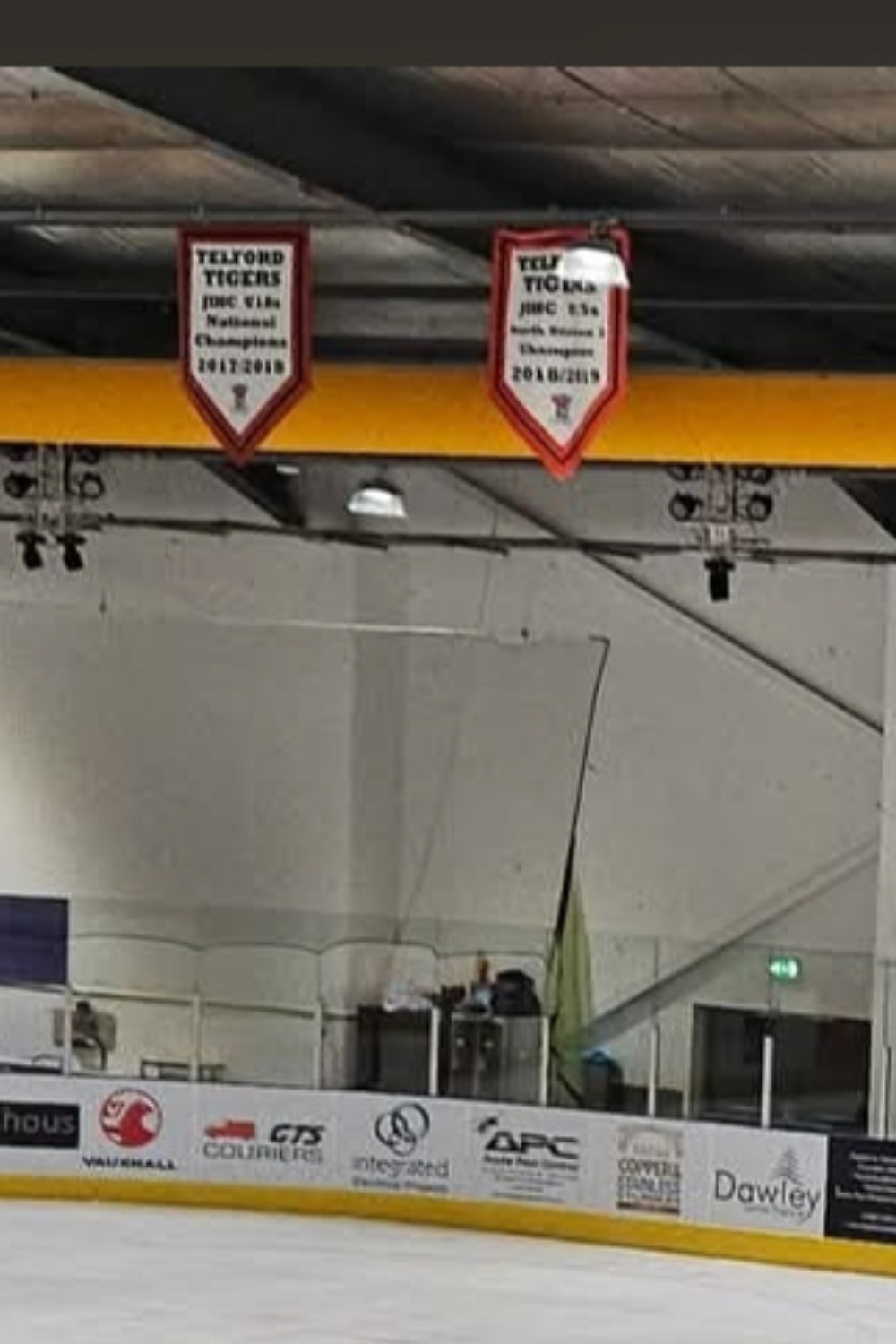
  • AWAY GUIDE:  TELFORD ICE RINK – what to know before you go

    AWAY GUIDE:  TELFORD ICE RINK – what to know before you go

    OK – full disclosure – we’re a bit biased on this one, as it was our kids’ first ever road game… but Telford is one of those rinks that can turn an away game into a genuinely good day out. It’s set right by Southwater, there’s plenty to do if you’ve got time, and it’s one of the more family-friendly setups you’ll come across. If you’re travelling a bit further for this one, it’s worth planning ahead — here’s how we approach away weekends

    Telford is also busy. Public sessions are popular, the rink can feel chaotic at peak times, and if you’re not prepared for how things run, it can catch you out.

    Here’s how to make the most of it.

    Parking Reality

    Parking at Telford is straightforward — until it isn’t. If you know where to go and what to expect on the way out, it’s one of the easier setups. If you don’t, it can be surprisingly frustrating.

    • The closest option is billed in Google Maps as “The Centre Car Park” – suggesting it’s part of the International Convention Centre next door – it’s not though, and it’s right next to the rink.
    • This is a great option – close, super clean and pretty spacious, and lifts. It’s also pretty reliable for space – although it’s not tall and in the depths of winter the top, open air, storey does get icy. 
    • The down side is that it can get expensive if you’re there for a couple of days.
    • Payment is on exit – there are only two machines and they can be temperamental so expect queues.
    • Southwater shopping centre offers a decent alternative – and is only a few minutes’ more walk.

    Inside the Rink

    The first thing you’ll notice here is how busy it can feel — especially if there’s a public skate running alongside your game. This is a council run rink and just feels… loved and used.

    • Seating is only available on one side of the rink and is accessed via stairs or a lift. It’s still plentiful for kids games though.
    • There’s a lovely rinkside shop – Sliders – that has rescued more than one player who’s forgotten kit. Just be careful if you go in “just to browse” – there’s a surprisingly good selection of NHL jerseys in there too.
    • Dressing rooms can be unpredictable — don’t assume you’ll have access after your game. This can be dependent on whether either of Telford’s NIHL teams is playing.
    • Toilet watch – ladies, you might want to take seat covers to this one. We’re talking no separate seat and the tops of the loos being hit hard by the scratched seat thing you only ever see at rinks.

    Coffee & Food

    Food and drink here is perfectly workable — but like most rinks, it depends on timing and expectations.

    • There’s a cafe that punches above its weight for its size. Expect the usual selection of drinks, crisps, sweets, flapjacks, and fried foods. 
    • The range is small but the chips and curry sauce is elite (so I’m told…)
    • Vending machines offer the usual options too if the cafe is closed.
    • One of Telford’s biggest strengths is that Southwater park and shopping centre are right on the doorstep. Take your pick of cafes to grab drinks to take in, or make a day of it and stop for lunch before/after the game at one of the many restaurants.

    What Makes It Different

    What really sets Telford apart is everything around the rink. This is one of the few away days that can easily turn into a full day out if you want it to.

    • There’s a soft play on site – a good option for younger siblings who need to let off steam.
    • Southwater park is a real gem – multiple play areas, masses of space for picnics, a rope climbing course and even a small zoo!
    • The shopping centre has a great range of both shops for all interests and bars, cafes and restaurants for all tastes.
    • You’ll also find a cinema and bowling alley within minutes of the rink.

     What Can Catch You Out

    For all its positives, there are a few things here that can catch you out if you’re not expecting them.

    • For what can feel like a relatively small car park, the queue for payment can be HUGE – send someone ahead if you can!
    • Dressing room space can be a challenge – think teams sharing for cross ices or bags having to be brought out during games. Make sure everything is well labelled, just in case.
    • Don’t rush for the front row of seating in the blocks – there’s a bar running across that will be RIGHT in your line of sight!
    • Make sure your kids don’t walk on the ramps rinkside – if they do they’ll slip up as soon as they hit the ice. Those things are kryptonite for lovely sharp edges.
    • It will feel chaotic but don’t let that put you off. Lean into it and you can’t go wrong.

    Our Honest Take

    Telford can feel chaotic — there’s no getting around that. Parking queues, squeeze for changing room space, and busy public skates. But there’s also something quite warm about it too – it’s a space that’s used and loved. You might need to put a bit more prep into games here, but trust us, it’ll be worth it!

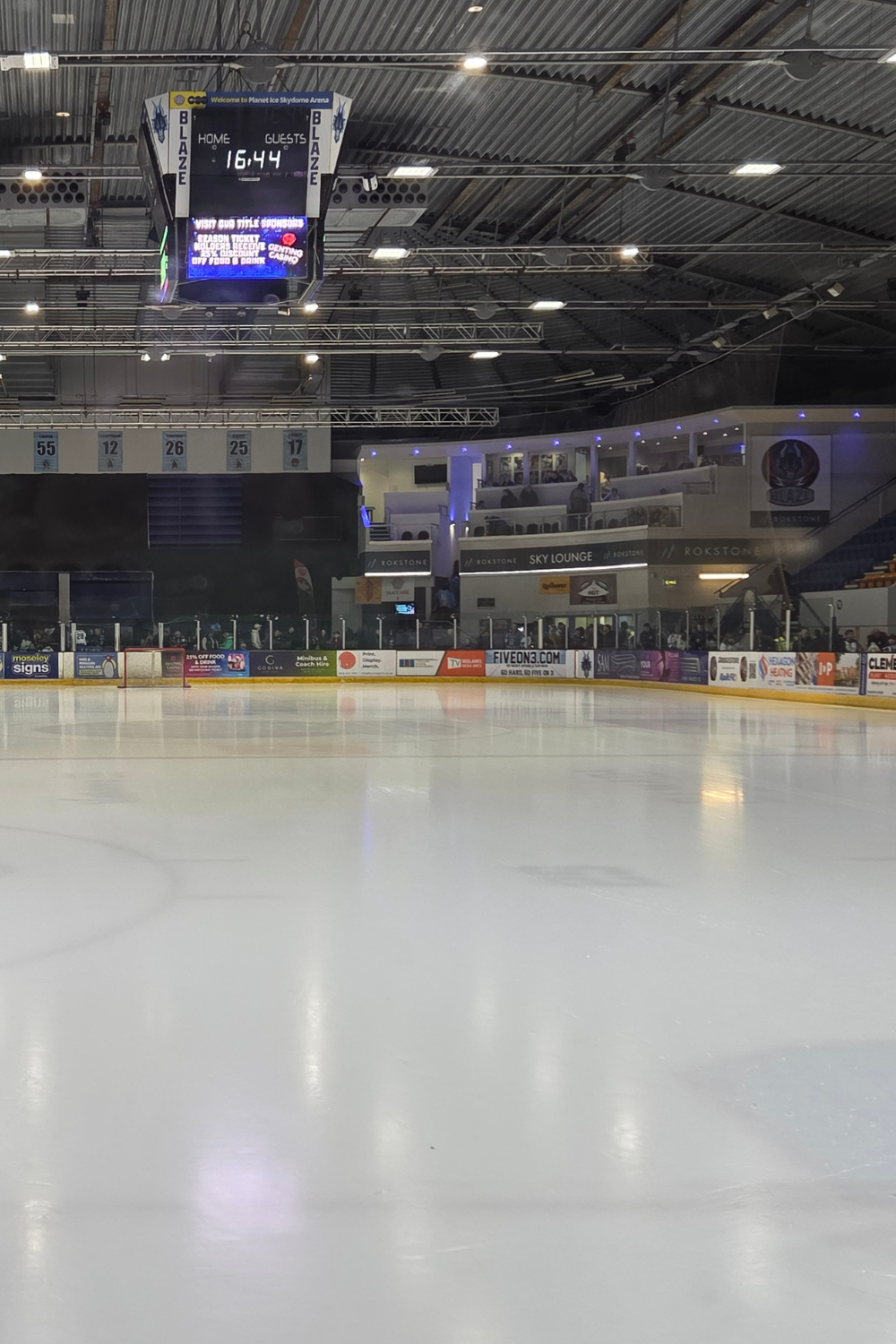
  • Away Guide: Skydome Arena, Coventry – What to Know Before You Go

    Away Guide: Skydome Arena, Coventry – What to Know Before You Go

    The Skydome in Coventry is one of those rinks most UK hockey families will get to know sooner or later. It’s busy, it’s loud, and it doesn’t always run quite the way you expect — but once you’ve been a couple of times, you realise it’s actually one of the easier away days to navigate. If this is your first away trip, check out our away game guide first. This guide covers everything you need to know before visiting the Skydome for a UK ice hockey game

    PARKING REALITY

    The Skydome is actually one of the easiest rinks for parking — if you know where to go.

    • There is a very large multi-story directly behind the rink, operated by APCOA.
    • Download the APCOA app and set up your payment card before you arrive. This is a pay on exit car park and it’s so much easier to do on your phone as you head to your car than join a big queue. 
    • BONUS TIP – if you’re spending a lot of time here in one week go online for the £10 weekly ticket. It’s an absolute bargain!
    • This car park is TALL. Do not be the wally who creates a massive queue trying to squeeze into a really rubbish spot just because it’s on the ground floor. Keep going up. I promise, there will be good spaces if you keep the faith.
    • There are lifts at the cinema end – use these and those wheeled kit bags will thank you. 
    • There are plenty of other car parks around the city centre if you really need them, but you’re looking at anything from a five to ten minute walk. 

    INSIDE THE RINK

    Here’s what you need to know about being inside…

    • It’s cold. (As it should be. We’re here for ice sports… dress appropriately and embrace it folks!)
    • There is a lot of seating and views are generally good wherever you go. Do be aware that for junior games, unless there’s maintenance that makes it impossible or it’s under 10s cross ice games, you WILL be asked to sit in blocks 2,3, and 4. This is to keep spectators away from the players’ benches – no need for crowds to be shouting at kids, right?
    • For the most part, dressing rooms are plentiful so plenty of room for kit and bags to go straight in with the kids. The managers will know where to go.
    • Toilet reality check – not the worst but definitely not the best. For preference, aim for the ones accessed via Crosby’s – these are usually your best bet.
    • It’s worth checking if there’s another game on afterwards. If the NIHL Blaze are playing straight after you’ll need to leave via the Fire Exit by the Meal Hut, NOT the main entrance/exit.

    Once you know these quirks, it’s actually a very easy rink to navigate.

    COFFEE & FOOD

    On paper there’s a reasonable offering, but your experience will depend on how well staffed the arena is while you’re there. Here’s what you need to know to navigate the possibilities:

    • There are a few kiosk style outlets, plenty of vending machines and a sports bar – Crosby’s – on site. During a full event you’ll typically find:
      • crisps
      • sweets
      • drinks
      • chicken and chips style meals
      • hot dogs
      • fancy doughnuts
      • Chicago Town Pizza. 

    Not the healthiest of ranges but will keep kids happy for the most part.

    • Veggie/vegan options are limited but not impossible.
    • For full events, there will be queues and long wait times. Embrace it and order early. 
    • For smaller events – kids games, looking at you – there will be minimal staffing, and a smaller range of food options. For these games though, you can take your own food in.
    • If you’re lucky there may be a bake sale on the go – take change.
    • If you have the time, there are plenty of other options in Coventry. Belgrade Plaza is a five minute walk from the rink and hosts Bella Italia, Wing Kingz and Pizza Express; or head through the precinct and towards Cathedral Lanes for a good range of chain and independent options. All very walkable.

    WHAT FIRST-TIMERS DON’T EXPECT

    The Skydome can be a busy rink at times — and if you’re not expecting it, it can feel a bit overwhelming on your first visit. Here’s how to get the best from it:

    • It can get busy rinkside while you’re waiting — especially in the winter months. If you need a breather, Crosby’s is usually your best bet
    • If you decide to jump on a public skate session while you wait, just be aware — it’s very much a ‘hockey kids keep your heads down while figure skaters do their thing’ kind of rink. Manage expectations accordingly. Sucks, I know.
    • Having access to soap in the loos is a bit of a roulette game – a pack of travel soap sheets can be a lifesaver.
    • It’s cold. I know I’ve said it already, but it’s worth repeating — dress for it and you’ll be fine.
    • Plenty of parents can and usually do stand at the plexi for games.
    • The stairs between the seating blocks can be a bit slippy — take it steady.
    • The Ring Road! The Skydome sits just inside it between junctions 6 and 7 so you can’t avoid it – just keep your wits about you and you’ll be fine. You may even grow to love that crazy traffic system!

    OUR HONEST TAKE

    Look – it’s a Planet Ice rink so upkeep is never going to be the best. It’s not the calmest or quietest rink you’ll visit either, but it’s pretty well set up, easy to get around, and once you know how it works, it’s a very manageable away day. For all that it’s rough around the edges, it has its charm – atmospherically chilly; accommodating and spacious for spectators; and ultimately home to an EIHL team so equipped with everything it needs. 

    FINAL TIPS BEFORE YOU GO

    • Set up the parking app before you arrive
    • Don’t sleep on Coventry as a city to explore
    • Bring gloves, a hat and a scarf — you will need them  
  • What We Pack for Every UK Hockey Away Game

    What We Pack for Every UK Hockey Away Game

    It’s road game day. Exciting? Usually. I mean, even if you’re nervous about the result, who doesn’t love a UK road trip, right? Daunting? Oh yes. You realise something’s been left behind and this isn’t nip back for those forgotten essentials territory. It’s find somewhere you can have a big sweary outburst into the air without offending anyone territory. 

    But you can do this. Deep breaths, a thorough read through of our handy guide below and avoiding leaving it to the last minute and you’ll be a-ok. After a few seasons of getting it wrong, this is what actually makes it into the car for every away game…

    The Non-Negotiables

    These are the absolute you’re-not-hitting-the-ice-without-these bits. The bits you’ll be able to pack in your sleep soon enough. Under no circumstances forget these!

    • Kit (check out our post on current EIH rules on what’s needed) in secure kitbag
    • Stick

    The Team Specifics

    These will vary team by team so make sure you ask your coach/manager!

    • Game fees
    • Team specific kit (eg short covers if you have them)

    The “Don’t Forget Until You Forget” Items

    These are the unsung heroes – still essentials and a proper pain if you forget them. They are a bit less obvious than your non-negotiables though and can fly under the radar…

    • Leg tape. More specifically, enough leg tape. Not the the tail end of a roll. Trust me, the socks won’t make it if you skimp on this.
    • Spare laces. Picture it – they’re lacing up but manage to pull the end through the top hole and it’s too frayed to go back in. Nightmare fuel… unless you have a spare set in the bag.
    • Water bottle. Seriously – those kids are working hard. They’ll need it. 
    • Spare sticks. I’m not saying buy two fancy pants sticks everytime they size up… keeping their old one even if it’s a bit small will do. Just don’t wait for their stick to break mid-game before you realise that an extra one on hand is pretty useful!
    • Stick tape and wax. There’s a good chance you’ll forget to retape their stick before you go. Future proof yourself and pack tape and wax – you can sort their stick while they’re off warming up and job’s a good ‘un. 

    Food & Fuel

    Don’t forget the obvious bit: you’re on the road for hours.

    • Make sure your tank is full or battery fully charged, and that you’ve factored in stops to refill/recharge later if your range won’t get you home and back. This is not the moment for an RAC call out. 
    • Plan your food. If there’s a cafe/restaurant etc that might do you, but don’t sleep on the benefits of planning ahead. Hot food in thermal pots… sandwiches and some big sharing bags of crisps. Lifesavers, the lot of them.
    • Snacks – also good. We love Trek protein flapjacks for our kids before the warm ups for a nice boost… and we also like a snack or two for us while we’re waiting/watching. Don’t rely on the rink vending machines!

    The Car Survival Kit

    • Books – great for keeping everyone calm, quiet and occupied.
    • Tablets – maybe less quiet and calm but also can keep kids occupied. 
    • Powerbanks – see above. Avoid the “my batteries just run out!!!” melt down at all costs.
    • A knock out playlist – energising for the way there and relaxing for the way back is always a winning approach. 
    • Blankets – especially if you’ll be back late. 
    • You may need more for a longer trip – if you’re staying the night somewhere to make it work then check out our guide to away weekends.

    The “Learned the Hard Way” Extras

    Yes, we have been caught out before. It’s not great – but if that spares you trouble then go ahead and learn from our naivety!

    • Helmet repair kit. Sounds like a total nice to have, but when that chin strap popper finally gives up and your kid can’t secure their helmet, the chances of someone happening to have a spare helmet in their bag that fits are slim to non-existent. 
    • Loose change. Whether it’s oldey timey parking machines or the 50/50 raffle ticket sales you’re going to need some of that cold hard cash. 
    • Calpol for kids. Sometimes, your kid is going to have a fall or knock that isn’t serious but still doesn’t feel all that good. 

    You’ll still forget something occasionally — everyone does.

    But if you’ve packed the essentials, planned ahead and given yourself a bit of breathing room, it stops being a disaster and becomes part of the routine.

    Hockey away days are never completely smooth. That’s half the point.

    But with the right kit in the car, they’re a lot easier to enjoy.

  • UK Hockey Away Weekends: What Parents Need to Know (And How to Survive Them)

    UK Hockey Away Weekends: What Parents Need to Know (And How to Survive Them)

    Our first ever fixture list really threw us. Under 10s kids playing at a rink almost 100 miles away?! 200 mile round trip for a hobby?!?!?! Of course, we quickly learned that 100 miles is a local game. That’s there-and-back-in-a-day territory. As our children aged up we collected more and more rinks for our must travel to list, and they got further and further away. 

    I won’t lie, some of these trips are daunting on paper. Especially when you realise that some of them are going to demand a night away to have any chance of working. But don’t panic. Deep breaths, thinking it through well in advance, and this handy guide are all you need to get through it. You’ve got this!

    Plan

    Whether you’re naturally an Overthinking Omar or Last-mInute Larry, trust me on this one – you NEED to plan weekends away. It’’s one thing to be a bit late, or to realise you’ve left the skates behind when you’re only 20 minutes away from the safety of home, but away weekends snatch that luxury away.

    So, here’s what you do… first off, the team coach or manager will tell you when you need to meet. That is your One Key Truth for the weekend – everything else will follow. Seriously – don’t ever aim to be that parent that shows up half an hour after everyone else (that said, if the logistics just aren’t going to work speak to the team manager before the weekend. They’ll understand, so long as they know).

    Start with your One Key Truth and work backwards. 

    • Where am I going to park? How long will it take me to walk to the meeting spot from there?
    • How long does Google say it’s going to take to drive over there? …and how does my driving style and speed compare to google? Can I do it in one go or do I need to think about… loo stops? Snack stops? Petrol/EV charging stops? 
    • If I tell the kids it’s time to leave, will they be straight out of the door or will it land for them as “your half an hour dither about countdown has just begun?”

    Map all of this out a good day or two in advance – this will tell you when you actually need to leave. There’s a good chance, depending on how far you’re going, that it’ll still be dark outside. Good job we all love coffee eh?

    The Kit Situation (It’s Always More Than You Think)

    Planning and packing go hand in hand. If you’re missing kit but the rink has a hockey shop, it’s an expensive error. If you’re missing kit and there is not shop-in-shining-armour to save you… well, you’d better hope someone has spares because if not you’ll have travelled halfway across the country so that your kid can sit in the stands and watch everyone else play. 

    I’ll create separate posts to build out each of these, but your essential travel list is

    • The Kit Bag. With all kit in, obviously. 
    • Sticks. If your kid’s bag doesn’t have a stick holder make sure you don’t forget them. Always bring at least two just in case a slapshot goes horribly wrong.
    • Small bag suitcase with pyjamas, essential toiletries and spare clothes for you and everyone you’re travelling with.
    • Snacks, snacks and a few snacks.
    • Rink Essentials – small pouch with everything you might need
    • Game/tournament fees in cash if needed, plus a bit of change if you want a go on the 50/50 or raffle.
    • Books, pack of cards, tablets… whatever gets your family through the car journey/downtime (more below)
    • Powerbanks. The days are long folks!

    Choosing Where to Stay

    For long journeys, or “unhelpful” face-off times, hitting the road after the game just isn’t always practical or something you can quite face. This is one of the things that really sets ice-hockey apart from other sports – don’t you just love that for us? Anyway – this is what elevates roads games to weekends away and why nights away become a thing.

    If you’re lucky, you might have family or good friends living fairly close to the game location so don’t be afraid to ask if you can stay over – it’s a good excuse for a catch up, and will save you a bit of money. If not, it’s time for a hotel booking. Things to consider:

    • How close is it to the rink? What’s your appetite for onward travel?
    • Realistically, how long will you spend there? An off motorway hotel can often be cheaper and if you’re literally just crashing for the night then beautiful grounds aren’t a necessity.
    • Check for flexible bookings. Reality check time – fixtures can and do get rearranged all the time. Booking at the start of the season is GREAT for availability and lowest prices, but only if you can cancel rooms with no penalty.
    • Is parking included or will you have to fork out for the not-even-that-snazzy privately owned multistory over the road?
    • When is check in and check out? Does that work with your game and travel times?
    • What food options are there onsite or nearby? Can you get a post game meal? Will breakfast be served before you have to hit the road again?
    • Don’t overlook cheap and cheerful chains – if you’re doing this multiple times per season, chains where you know exactly what you’re getting wherever you are can be very helpful. And we’ve yet to find a rink that doesn’t have a Premier Inn near enough to be a viable option

    Managing the In-Between Hours

    One thing that can really set long road trips and tournaments apart is the time spent kicking around not really knowing what to do with yourself. Chances are your coach/manager is going to ask you to meet good and early – secretly this will be to make sure that even if the M6 is an absolute nightmare there’s still enough of you there by face-off to actually ice a team rather than forfeit cause you’re all stuck going nowhere in queues. In reality, nine time out of ten it’ll mean a lot of waiting around. If you’re somewhere with lots to do right outside the rink door (Telford, I’m looking at you) then great but… well, not all UK rinks have massive parks right on the doorstep!

    You could just spend that time sitting in stands, not doing much more than feeling cold, or…

    • Take a few activities with you – a pack of cards, or games like top trumps, dobble etc. These won’t take up lots of space but can nicely pass a bit of time.
    • Devices are also lifesavers – tablets, kindles etc. These can be especially useful for siblings – just remember to download some bits to watch in advance because you really can’t be relying on having a good wifi connection at a rink.
    • This might be your time to eat, especially if you’ve not had a pit stop in your journey. Rink picnics can be just the trick!
    • Don’t underestimate the value of your hockey family here. Sorry for the cliched term, but you spend a lot of time with these people, and unless you’re very unlucky, chances are they’ll be good folks. Chat, laugh, joke, speculate about result… these are some of the moments you’ll remember for a looooong time. 
    • …and speaking of hockey family, ALL of the team siblings are part of this too. They’ll have a great knack of keeping each other amused. And I absolutely didn’t tell you this but if you pack mini-sticks and a ball you’ll rarely find them bored.
      .

    The Emotional Bit

    You might be excited about weekends away; you might dread it. You might find yourself wondering, once in while, how the heck you’re supposed to feed your life admin in between work and weekends gobbled up by hockey. All normal so don’t sweat it. 

    But also – don’t sleep on how much you’ll get from these weekends too. Seeing your kid do something they absolutely love. With a bunch of friends they’ve made in a team, in a team that would most likely do anything for each other. Seeing them laugh together, celebrate together, and lift each other up if they’re feeling down. Sharing the wins and losses with them and the other parents. The pride of knowing that whatever happens, everyone has given it their all. It can be hard to explain to non hockey parents but trust me – it’s worth it.
    Measured.

     Quick Summary: The Survival Rules

    • Plan the weekend around your meet time
    • Book hotels early (with flexible rates)
    • Pack the night before
    • Label everything
    • Plan for yourself, not just your player
    • Bring coffee